
Running an appliance repair business involves much more than fixing washing machines, refrigerators, air conditioners, microwaves, dishwashers, and other household appliances. Repair companies must manage customer inquiries, service requests, technician schedules, spare parts, invoices, payments, warranties, and follow-ups. When these activities are handled manually, businesses can face delays, missed appointments, poor communication, and difficulty tracking service performance.
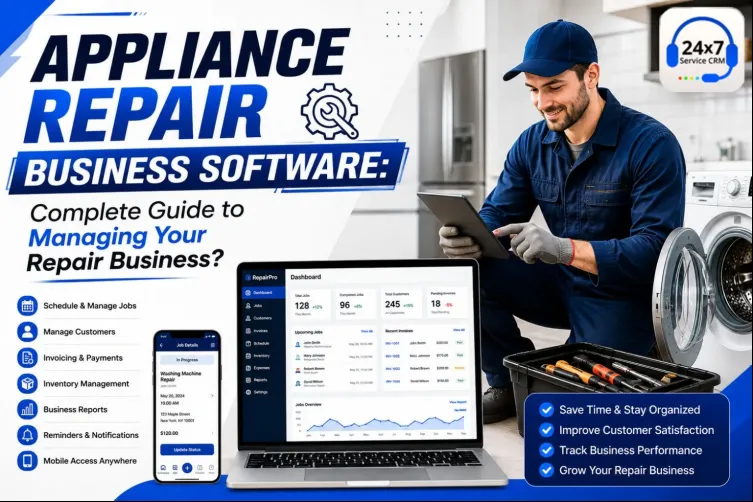
This is where Appliance Repair Business Software can help. A dedicated software solution allows appliance repair companies to centralize their customer information, manage service requests, schedule technicians, track repair jobs, and improve overall business efficiency.
Whether you operate a small local repair company or manage a growing appliance service network, Software for appliance repair business can provide the tools needed to organize daily operations and deliver a better customer experience. When combined with a Service CRM, it can connect customer management, field service, invoicing, inventory, and after-sales support in one platform.
What Is Appliance Repair Business Software?
Appliance Repair Business Software is a digital management platform designed specifically for companies that provide appliance installation, repair, servicing, and maintenance.
The software can manage customer records, appliance information, complaints, service appointments, technician assignments, spare parts, estimates, invoices, warranties, and service history.
Instead of relying on spreadsheets, paper documents, phone calls, and multiple messaging applications, businesses can manage their service operations through a centralized system.
Why Appliance Repair Businesses Need Software?
As an appliance repair business grows, the number of customers and daily service requests also increases. Managing appointments manually can become difficult, especially when technicians are working across different locations.
A single customer may call multiple times about the same problem, while service managers may need to coordinate several technicians simultaneously. Without an organized system, service requests can be missed and appointments may be delayed.
Software for appliance repair business creates a structured workflow that helps businesses register complaints, assign technicians, track job progress, manage parts, and close service requests efficiently.
Key Features of Appliance Repair Business Software
1. Customer Management
Customer information is one of the most valuable assets for a repair business. Software allows companies to maintain customer names, contact information, addresses, appliance details, previous service records, warranties, and other relevant information in one place.
When a customer contacts the company again, staff can quickly access their history and understand previous service issues.
2. Service Request Management
Customers may report problems with refrigerators, washing machines, ovens, air conditioners, water heaters, or other appliances.
The software allows support teams to create service requests with details such as appliance type, problem description, priority, customer location, and preferred service time.
Managers can monitor the status of each complaint, including new, assigned, in-progress, pending, and completed jobs.
3. Technician Scheduling
Technician scheduling is a major part of appliance repair operations. Managers need to consider technician availability, location, workload, and technical skills when assigning jobs.
Appliance Repair Business Software helps managers allocate service calls more efficiently. Technicians can access assigned jobs and update their status from the field.
Better scheduling can reduce travel time, avoid appointment conflicts, and help technicians complete more service calls.
4. Mobile Access for Technicians
Field technicians often work away from the office. Mobile access allows them to view customer details, service requests, appliance information, job instructions, and previous repair history while visiting customers.
After completing a job, technicians can update the service status, add repair notes, record parts used, upload service documents, and capture customer confirmation.
This reduces paperwork and improves real-time communication between field employees and office teams.
5. Appliance and Service History
Maintaining a complete appliance history helps technicians understand recurring problems.
The system can store appliance brand, model, serial number, installation date, warranty information, previous complaints, repairs, replacement parts, and maintenance visits.
When the same appliance requires service again, technicians can review its history before starting the repair.
6. Spare Parts and Inventory Management
Repair jobs frequently require spare parts. If the required part is unavailable, technicians may need to return later, increasing service time and customer inconvenience.
Software can help businesses monitor spare parts inventory, stock levels, parts issued to technicians, consumption, and purchase requirements.
This improves inventory visibility and helps service managers ensure that commonly required parts are available when needed.
7. Estimate and Invoice Management
An appliance repair company may need to provide estimates before completing certain repairs. Software can help generate and track estimates based on labor charges, spare parts, service fees, and other costs.
Once the job is completed, the approved estimate can be converted into an invoice. This creates a more organized billing process and reduces manual data entry.
8. Warranty and AMC Management
Many appliance repair companies provide warranties or Annual Maintenance Contracts (AMCs). Managing contract information manually can lead to missed renewal opportunities.
Software can store warranty and AMC details, service frequency, start dates, expiry dates, and scheduled visits. Automated reminders can help teams follow up with customers before contracts expire.
This can create opportunities for recurring revenue and improve customer retention.
How Service CRM Improves Appliance Repair Operations?
A Service CRM combines customer relationship management with field service operations. It allows appliance repair companies to manage the complete customer journey from initial inquiry to service completion and follow-up.
For example, when a customer contacts the company, their details can be recorded in the CRM. The support team can create a service request, assign a technician, schedule an appointment, track the repair, record spare parts used, generate an invoice, and follow up with the customer after service.
This connected process reduces communication gaps between customer support, service managers, technicians, and billing teams.
Benefits of Software for Appliance Repair Business
Implementing the right software can provide several operational and business benefits.
Faster Service Response
Service requests can be recorded and assigned quickly, helping companies respond to customers faster.
Better Technician Productivity
Efficient scheduling and mobile access allow technicians to manage their jobs more effectively and reduce unnecessary administrative work.
Improved Customer Experience
Customers receive better communication about appointments, technician visits, service status, and repair completion.
Reduced Administrative Work
Automation reduces the need for manual spreadsheets, paper forms, repeated data entry, and disconnected records.
Better Revenue Management
Accurate estimates, invoices, service contracts, and payment tracking help businesses maintain better financial control.
Increased Customer Retention
A well-organized service process creates a professional customer experience. Follow-ups, maintenance reminders, and AMC renewal notifications can encourage customers to continue using the company’s services.
How Appliance Repair Software Supports Business Growth?
Appliance repair businesses often grow through repeat customers, referrals, maintenance contracts, and partnerships with appliance manufacturers or retailers. Efficient service management becomes increasingly important as the customer base expands.
With centralized data and automated workflows, companies can handle more service requests without increasing administrative workload at the same rate. Managers can also use reports to identify high-demand services, frequently repaired appliance brands, technician performance, service turnaround time, and recurring customer issues.
These insights can help businesses improve staffing, inventory planning, pricing, and marketing strategies.
Choosing the Right Appliance Repair Business Software
Before selecting a software solution, repair companies should evaluate their current and future requirements.
Important features to consider include:
· Customer and contact management
· Service request tracking
· Technician scheduling
· Mobile application or mobile access
· Appliance asset management
· Service history
· Spare parts inventory
· Estimates and invoices
· Warranty and AMC management
· Automated notifications
· Service reports
· Performance dashboards
· Customer follow-up
· Service CRM integration
The platform should be scalable, easy to use, and suitable for both office staff and field technicians.
Conclusion
Managing an appliance repair company efficiently requires strong coordination between customers, service managers, technicians, inventory teams, and billing departments. Manual processes can become difficult to manage as the business grows.
Appliance Repair Business Software provides a centralized solution for managing customers, service requests, technicians, appliance records, spare parts, invoices, warranties, and maintenance contracts. The right Software for appliance repair business can improve productivity, reduce service delays, and create a more professional customer experience.
By integrating these capabilities with a Service CRM, appliance repair companies can connect customer management and field service operations in one platform. This helps businesses respond faster, manage technicians more effectively, improve customer retention, and build a scalable foundation for long-term growth.
